
192countries
Country maps
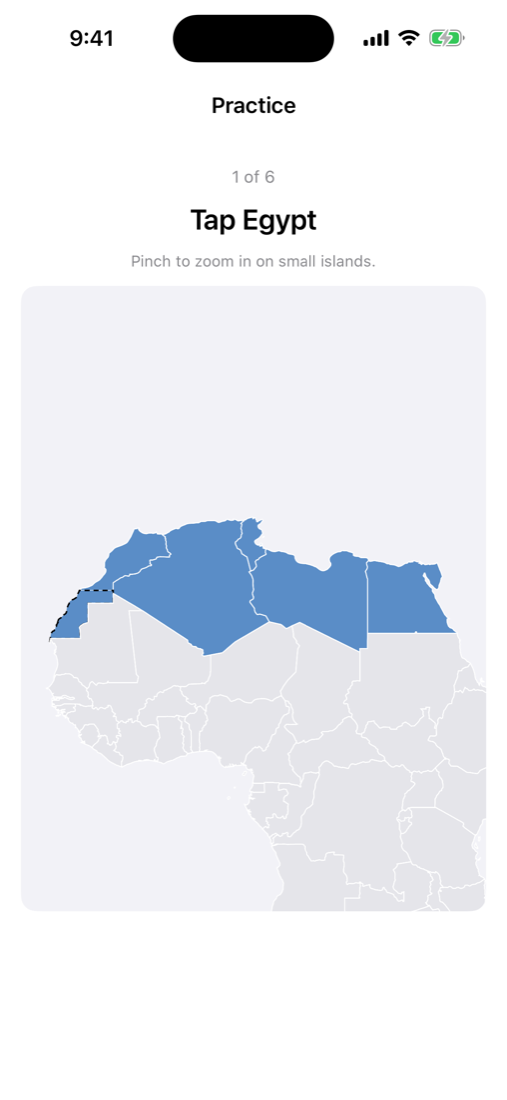
Africa, Latin America and the Caribbean, Europe, Asia and Oceania. You learn one row of countries, tap each one on the map, and add the next row when you know it. The US and Canada aren't in yet.
Where every country is. How the Earth's history is laid out. The periodic table. How to spot a bad argument. A few facts at a time, on your iPhone.
In testing on iPhone now. Not on the App Store yet.
A page from the app
You don't get 54 countries at once. You get the top row, learn it until you can tap every country without a miss, and then the next row joins. Tap a row to see it the way the app shows it.
A page from the app
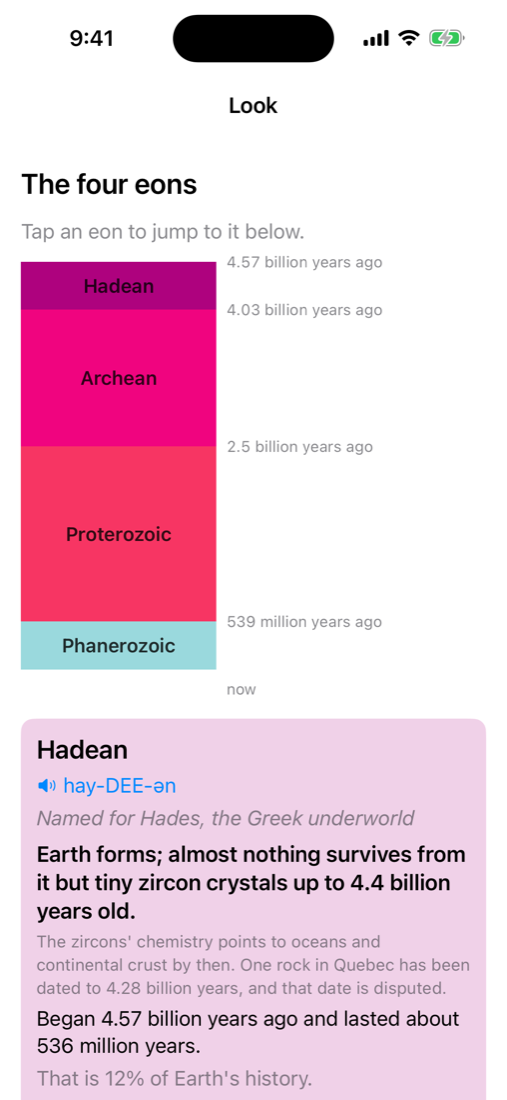
The app starts deep time here, with the four eons, before it zooms in to eras and then periods. You see how the whole thing is laid out before you're asked a single date.
billions of years ago
Animal fossils become widespread at the start of the last band. Every dinosaur, every mammal and all of human history fit inside it.
How it teaches
Every stage starts by showing you what you're about to learn. You study it, and then you're asked.
A row of West African countries, lit and named on the map, before any question.
Each stage adds a handful of new things. Get them right three rounds running and the next stage opens.
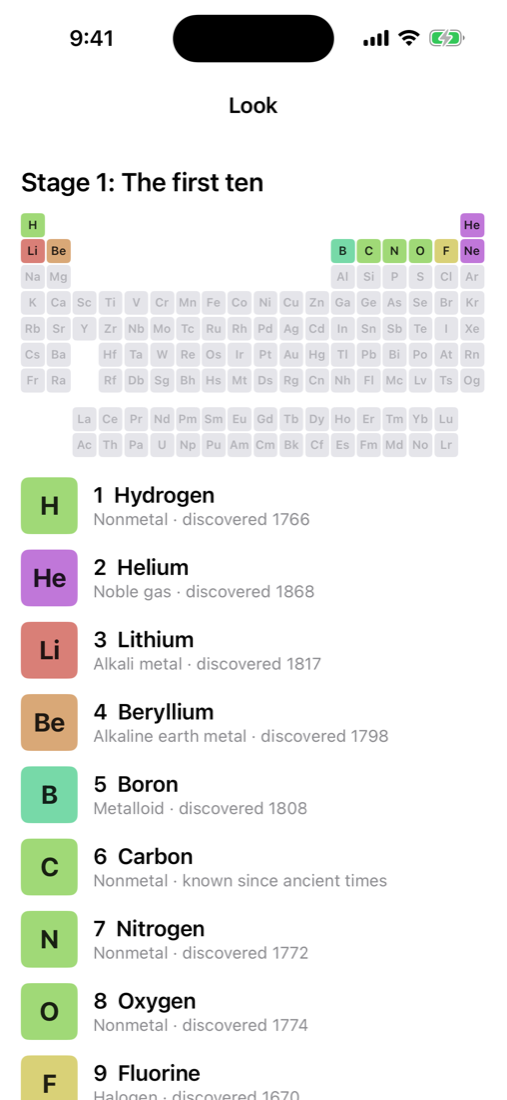
The periodic table starts with its first ten elements.
You learn how the whole thing is laid out before you learn its parts.
The four eons of Earth's history, then the eras, then the periods.
The same fact is asked from different directions.
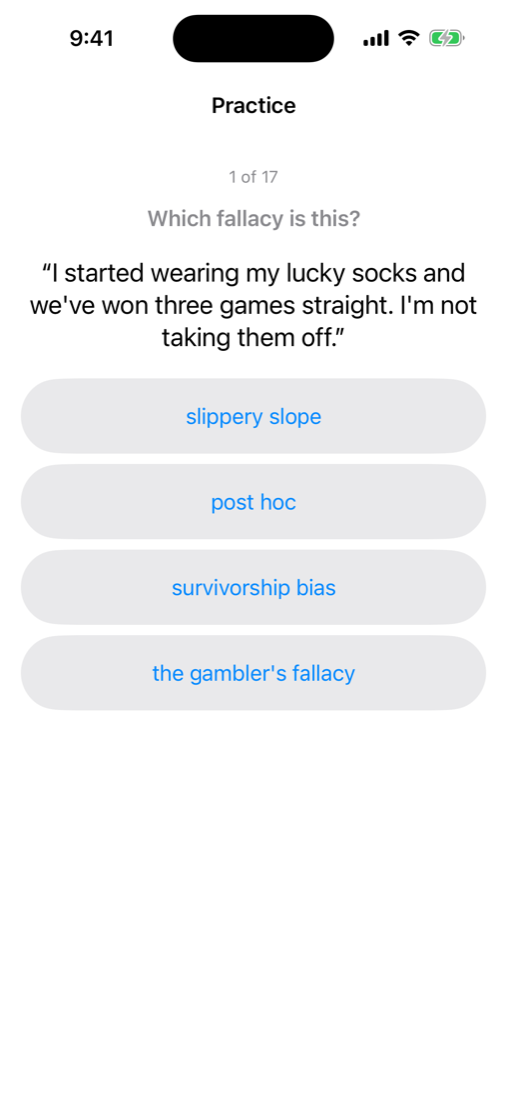
Name the fallacy in an everyday argument. For some, say whether a new argument is that fallacy or fair reasoning.
What's inside
Africa, Latin America and the Caribbean, Europe, Asia and Oceania. You learn one row of countries, tap each one on the map, and add the next row when you know it. The US and Canada aren't in yet.
Each stage is its own timeline drawn to scale. Every eon and era comes with what defines it, every period with a fact or two checked against its source, and every name with how to say it.
Starting with the first ten. Find each element on the table, then name it from its symbol.
Read a short everyday argument and pick the fallacy in it. For five of them, some cards ask whether the argument is the fallacy or fair reasoning, because trusting a doctor about medicine is not an appeal to authority.
What's new
Hear when it learns something new. One short email each time a topic is added.
What next
Tap the ones you'd want. You'll see how everyone has voted.
Want to know when your pick arrives? Leave your email and you'll hear each time a topic is added.